
Introduction:
The Sage Who Bridged Continents of Thought
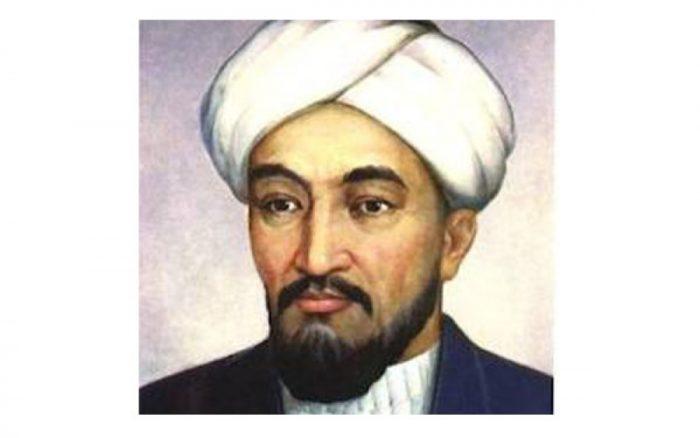
In the pantheon of Islamic philosophers, Abu Nasr al-Farabi (c. 872–950 CE) occupies a uniquely influential position. Known as “Al-Mu’allim al-Thani” (The Second Teacher)—second only to Aristotle, the “First Teacher”—al-Farabi was the first major systematizer of philosophy in the Islamic world. His grand synthesis of Greek thought, particularly Platonic and Aristotelian philosophy, with Islamic theology and political theory created a coherent philosophical framework that would shape Islamic intellectual history for centuries and influence European scholasticism. More than a commentator, he was an original architect of ideas who envisioned the ideal society and the path to human perfection.
Early Life and Intellectual Journey
Al-Farabi’s origins are somewhat enigmatic. He was likely of Persian or Turkic descent, born in the district of Farab (in modern-day Kazakhstan or possibly Afghanistan). His early education included Islamic jurisprudence and linguistics in Bukhara and possibl
y Shiraz. The pivotal turn came when he moved to Baghdad, the beating heart of the Abbasid Caliphate’s intellectual life. There, he immersed himself in the vast translation movement of Greek philosophical and scientific texts. He studied logic in
tensively under the Nestorian Christian scholar Yu
hanna ibn Haylan, mastering the entire Aristotelian logical corpus (Organon). Later in life, he moved to Aleppo under the patronage of the Hamdanid ruler Sayf al-Dawla, where he wrote many of his mature works until his death in Damascus in 950 CE.
Major Philosophical Contributions: Building an Intellectual Universe
Al-Farabi’s genius lay in his ability to organize, harmonize, and expand upon the legacy of Greek philosophy, making it speak to the concerns of his Islamic milieu.
- Metaphysics and Epistemology:
In his groundbreaking work “al-Madina al-Fadila” (The Virtuous City) and others, al-Farabi constructed a metaphysical hierarchy of existence. At its apex is the Necessary Being (God), the First Cause who emanates existence downward through a series of ten cosmic intellects, the last of which governs our sublunar world. This emanationist scheme (adapted from Neoplatonism) explained the universe’s order while maintaining God’s absolute transcendence. For humans, the ultimate goal is the attainment of happiness (sa’adah), which he defined as the perfection of the rational soul through the acquisition of knowledge, culminating in a potential connection with the Active Intellect—the divine source of human understanding.
- Metaphysics and Epistemology:
- Political Philosophy: His Masterpiece
Al-Farabi’s most original and enduring contribution is arguably his political thought. He famously compared the philosopher-king of Plato’s Republic to the Islamic Imam or Prophet-Legislator. In The Virtuous City and “Ara’ Ahl al-Madina al-Fadila” (The Opinions of the People of the Virtuous City), he described the ideal state as an organic whole mirroring the cosmos, ruled by a wise and virtuous leader who possesses both theoretical knowledge and the practical ability to guide people toward true happiness. He also provided a profound typology of “imperfect” or “ignorant” cities—those devoted to wealth, pleasure, or tyranny—offering a diagnostic tool for understanding political decay.
- Political Philosophy: His Masterpiece
- Logic and the Philosophy of Language:
As “The Second Teacher,” al-Farabi placed immense importance on logic as the essential tool for correct thinking and the foundation of all sciences. He wrote extensive commentaries on Aristotle’s logical works and independent treatises that explored the relationship between logic, grammar, and language. He argued that logic, being universal and concerned with the rules of thought itself, was superior to the specific rules of any one language (like Arabic or Greek).
- Logic and the Philosophy of Language:
- Music and Psychology:
Al-Farabi was also a renowned music theorist. His “Kitab al-Musiqi al-Kabir” (The Great Book of Music) is the most significant work on music in medieval Islam. He explored the mathematical theory of pitches, intervals, and instruments, but also deeply considered music’s psychological and ethical effects on the soul, linking it to his broader philosophical psychology.
- Music and Psychology:
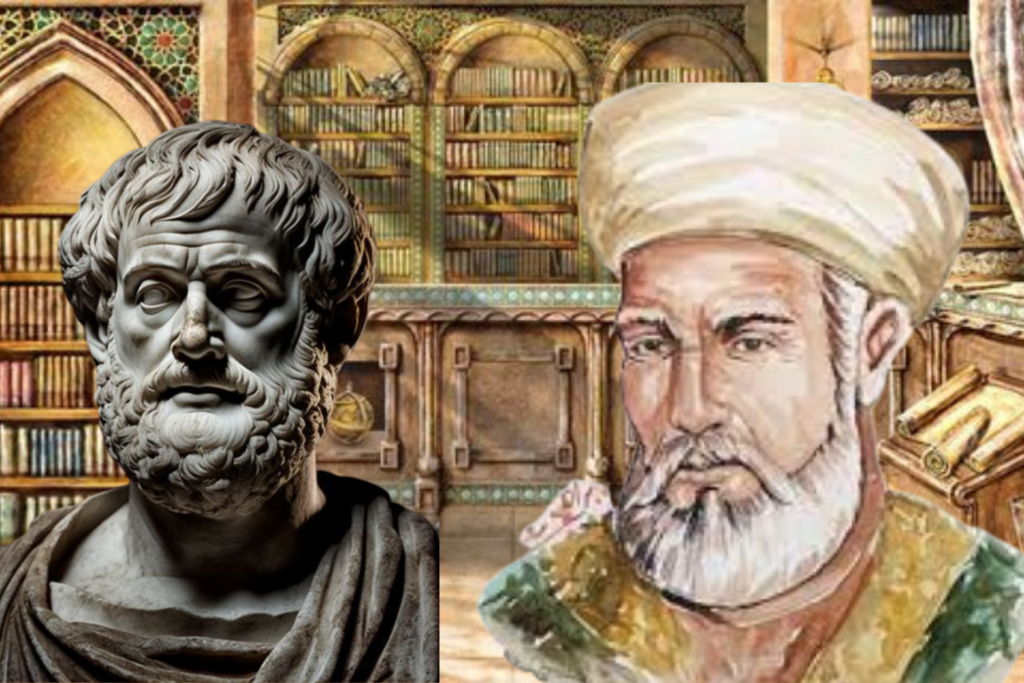
The title was not ligh
tly given. While Aristotle organized and systematized all known knowledge for the Greeks, al-Farabi performed a similar monumental task for the Islamic intellectual universe. He didn’t just translate Greek ideas; he digested, reconciled, and re-articulated them within a new cultural and religious context. He resolved apparent conflicts between Plato and Aristotle and, more boldly, between philosophy and revelation. For him, prophecy was a form of supreme philosophical imagination, where the prophet-philosopher receives truth from the Active Intellect and conveys it to the masses through symbols and laws.
Legacy and Influence
Al-Farabi’s impact cannot be overstated. He set the agenda for all later Islamic philosophers. Avicenna (Ibn Sina) famously said he read al-Farabi’s “On the Objects of Metaphysics” forty times before finally understanding Aristotle’s Metaphysics. His political philosophy resonated with later thinkers like Averroes (Ibn Rushd). His works, translated into Latin in medieval Europe (often under the name “Alpharabius”), influenced Thomas Aquinas, Maimonides, and the thinkers of the Enlightenment, shaping Western political and philosophical discourse. His vision of the philosopher as both a metaphysician and a political guide remains profoundly relevant.
Conclusion: The Enduring Relevance of Al-Farabi
In a world still grappling with questions about the relationship between knowledge and power, ethics and governance, and reason and faith, al-Farabi speaks across the centuries. He represents the pinnacle of cosmopolitan, systematic thought. As “The Second Teacher,” he reminds us that philosophy is not merely an abstract pursuit but a comprehensive way of life aimed at individual and collective flourishing. His quest to build a “Virtuous City” serves as a timeless invitation to reflect on the foundations of a just society and the role of wisdom in leading it.