
The Traditionalist School:The Foundational Principles
The Metaphysical Genesis and the Crisis of Modernity
The Traditionalist School, often referred to as the Perennialist School, emerged in the early 20th century as a radical and providential intellectual response to the spiritual bankruptcy of the modern Western world. At its heart, this school posits that the current historical epoch is not one of “progress,” but rather a period of profound spiritual occlusion and metaphysical darkness, often identified with the Kali Yuga of Hindu cosmology or the “Dark Age.
” The foundational premise rests on the distinction between the “Sacred” and the “Profane.” Traditionalists argue that modern civilization is the only one in human history to have developed entirely on a purely material basis, systematically severing its ties with the Divine. This rupture has led to what René Guénon termed the “Crisis of the Modern World,” characterized by an inversion of traditional hierarchies and the loss of the transcendent dimension in human life, leaving the modern subject in a state of existential alienation.
The Concept of Tradition and the Sophia Perennis
To understand the Traditionalist school perspective, one must redefine the term “Tradition” itself, moving beyond the colloquial meaning of mere “customs” or “folklore.” In this academic context, Tradition refers to a supra-human, primordial transmission of eternal truths that have been revealed to humanity since its origin.
This is the Sophia Perennis or the “Perennial Wisdom,” which constitutes the immutable core of all authentic spiritual civilizations. It is a vertical transmission of sacred knowledge that informs every aspect of life, from law and art to social structure and individual piety. Tradition, therefore, is not a dead relic of the past but a living, vibrant presence of the Eternal in the temporal realm. It provides the metaphysical “anchor” that prevents societies from drifting into the chaos of relativism and subjectivism, asserting that truth is objective, hierarchical, and divinely ordained.
The Transcendent Unity of Religions and Esoterism
One of the most profound and revolutionary contributions of the Traditionalist School is the doctrine of the “Transcendent Unity of Religions,” most notably articulated by Frithjof Schuon. This principle suggests that while religions differ fundamentally at their “exoteric” or outward level—due to differences in language, culture, and historical necessity—they converge at their “esoteric” or inward core.
This convergence is not a shallow syncretism or a modern “interfaith” compromise, but a metaphysical recognition that all revealed religions are distinct rays of the same Divine Sun. Each religion acts as a formal vehicle for the same Absolute Truth, adapted to the specific needs of different branches of humanity. By focusing on the Batin (the internal) rather than just the Zahir (the external), the Traditionalist scholar is able to navigate the diverse landscape of global spirituality without falling into the trap of religious exclusivism or secular indifference.
Intellection vs. Rationalism: The Recovery of the Heart
Finally, the Traditionalist school framework demands a complete restructuring of modern epistemology by distinguishing between “Ratio” (discursive reason) and “Intellectus” (pure intellection). Modernity has reduced the human mind to a mere calculating organ, capable only of analyzing the material world through logic and empirical observation—a process Traditionalists call “Rationalism.”
In contrast, the Perennialist perspective calls for the recovery of the “Intellect” or the “Eye of the Heart” (Ain al-Qalb), which is the faculty of direct, supra-rational perception of metaphysical principles. Unlike the analytical mind, which functions by dividing and categorizing, the Intellect functions through “total vision” and “unitive knowledge.” This recovery of the Intellect is not a rejection of logic, but a restoration of logic to its proper, subordinate place. It is through this sacred faculty that the human being can bridge the gap between the finite and the Infinite, transforming philosophy from a mere academic exercise into a transformative spiritual path.
The Sufi Foundations and Traditionalist School: The Esoteric Heart of the Perennial Philosophy
The Metaphysical Necessity of Sufism in Traditional Thought
Within the framework of the Traditionalist School, Sufism (Tasawwuf) is not merely regarded as a historical branch of Islamic piety, but as the living “Esoteric Core” of the final revelation. For figures like René Guénon and Frithjof Schuon, the Traditionalist project would be a mere intellectual exercise if it were not anchored in a practical, initiatic path. Sufism provided the “Effective Realization” of the metaphysical principles discussed in Traditionalist texts.
It is through the Sufi “Way” (Tariqah) that the seeker of Traditionalist School moves from “Theoretical Knowledge” (’Ilm al-Yaqin) to the “Truth of Certainty” (Haqq al-Yaqin). This transition is essential because Traditionalism asserts that modern man’s primary ailment is not just ignorance, but the loss of the “Sacred Faculty” that allows for the direct perception of the Divine. Sufism, as the heart of Tradition, offers the tools—through invocation (Dhikr) and contemplation—to restore this faculty.
The Akbarian Influence: Ibn ‘Arabi as the Master of Metaphysics
The intellectual structure of the Traditionalist School is profoundly “Akbarian,” referring to the teachings of Muhyiddin Ibn ‘Arabi, the Shaykh al-Akbar. His doctrine of Wahdat al-Wujud (The Transcendent Unity of Being) provided the metaphysical vocabulary for the school’s critique of modern dualism. Titus Burckhardt and René Guénon utilized Ibn ‘Arabi’s complex cosmology to explain the “Chain of Being” and the “Universal Man” (Al-Insan al-Kamil). For Traditionalists, Ibn ‘Arabi is the ultimate authority who bridged the gap between the “Absolute Reality” and the “Relative Manifestation.” His writings serve as the primary evidence that Islam possesses a sophisticated, supra-rational system that can answer the most profound questions of existence, providing a sanctuary for the Western intellect that has been disillusioned by the cold, mechanical logic of modern secularism.
Shaykh Ahmad al-Alawi: The Providential Source of the Lineage
The most significant historical and spiritual connection between the Traditionalist School and living Sufism is embodied in the person of Shaykh Ahmad al-Alawi of Mostaganem, Algeria. He was the spiritual master who initiated Frithjof Schuon and Martin Lings, thereby providing the “Initiatic Spark” that fueled the second generation of the school. Shaykh al-Alawi was seen as a “Renovator” (Mujaddid) of the Sufi path in the 20th century, representing a synthesis of profound metaphysical depth and saintly presence. His influence was so pervasive that his order, the Alawiyyah-Shadhiliyyah, became the spiritual home for many Western intellectuals who sought to flee the “Reign of Quantity.” Martin Lings’ iconic biography, A Sufi Saint of the Twentieth Century, remains the definitive proof of how the Shaykh’s influence transcended cultural boundaries to re-establish the “Sacred Center” in the modern world.
The Shadhili Order and the Intellectual Elite of the West
The choice of the Shadhili path by many Traditionalists was not accidental. The Shadhiliyyah is historically known as the order of the “Intellectual Elite,” emphasizing the integration of spiritual life with the demands of the world. René Guénon’s own initiation into the Shadhili path via Shaykh Abd al-Rahman Illaysh al-Kabir in Cairo provided him with the necessary “Regularity” and “Authority” to write his metaphysical treatises. This connection ensured that the Traditionalist School was not seen as a “New Age” invention but as a legitimate extension of a sacred chain (Silsilah) reaching back to the Prophet Muhammad. This initiatic legitimacy is what allowed the school to maintain its rigorous “Orthodoxy,” distinguishing it from the shallow syncretism often found in modern Western “spirituality.”
Al-Ghazali and the Deconstruction of Rationalism
The influence of Imam al-Ghazali is central to the Traditionalist objective of reclaiming the “Heart” from the “Mind.” Traditionalist scholars often cite al-Ghazali’s Deliverance from Error as a template for their own intellectual journeys. His successful critique of the Greek-influenced rational philosophers of his time mirrors the Traditionalist critique of modern scientific rationalism. By asserting that the “Light” cast into the heart by the Divine is the only source of infallible knowledge, al-Ghazali provided the epistemological foundation for the Perennial Philosophy. Scholars like Seyyed Hossein Nasr and Huston Smith have utilized the Ghazalian framework to argue that the “Scientific Method” is a restricted tool that is incapable of grasping the higher orders of reality, thus positioning Sufi epistemology as the only “Sacred Science” capable of providing total knowledge.
Rumi and the Aesthetic Theophany of the Divine
Jalaluddin Rumi’s role in the Traditionalist School is primarily “Aesthetic” and “Unitive.” Through Rumi, the Traditionalists school expressed the doctrine that “Beauty is the Splendor of Truth.” Frithjof Schuon, in particular, drew heavily from the Persian poetic tradition to explain the “Radiance” of the Divine. Rumi’s Masnavi is treated as an encyclopedia of symbolic intelligence, where every story and verse is a “Mirror” reflecting the Sophia Perennis. For the Traditionalist, Rumi is the proof that the path to God is not merely through dry logic but through the “Sacred Love” (‘Ishq) that dissolves the ego. This aesthetic dimension is crucial for the school’s mission to re-sacralize the world, as it demonstrates that the beauty of the cosmos is a “Theophany”—a direct manifestation of the Divine Names and Attributes.
The Goal of the Sufi-Traditionalist Synthesis: Al-Insan al-Kamil
The ultimate objective of integrating Sufi wisdom into the Traditionalist framework is the realization of the “Universal Man” (Al-Insan al-Kamil). This concept represents the human being who has transcended the limitations of the individual ego and has become a perfect mirror for the Divine Light. The Traditionalist School argues that the modern “Crisis” is essentially a crisis of “Identity”; man has forgotten who he is. By pointing to the Sufi masters—the Saints and Sages—the school provides a “Protological” model of what it means to be truly human. The Sufi path, within the Traditionalist perspective, is the “Vertical Ascent” that allows the human being to fulfill his cosmic function as the bridge between Heaven and Earth, ensuring that the Sacred remains a lived reality rather than a distant memory.
The Critique of Modernity and the Reign of Quantity
The Metaphysics of Decay and the Inversion of Order
In the Traditionalist critique, modernity is not viewed as a temporal stage in a linear progression of history, but as a catastrophic deviation from the primordial norm. René Guénon, the seminal figure of this school, argued that the modern world represents the final phase of a cyclical descent, where the qualitative essence of reality is gradually eclipsed by purely quantitative considerations. This process of “Solidification” implies that the world has become increasingly opaque to the Light of the Spirit, leading to a state where the “infra-human” elements of the psyche are mistaken for higher spiritual intuitions. In this context, the modern emphasis on “individualism” and “originality” is seen as a rebellious fragmentation of the collective human soul, a horizontal expansion that lacks any vertical orientation toward the Absolute. The result is a civilization that has mastered the mechanics of the material world while remaining profoundly ignorant of the metaphysical principles that govern existence, effectively building a magnificent edifice upon a foundation of shifting sand.
The Reign of Quantity and the Illusion of Progress
The shift from a qualitative to a quantitative worldview marks the definitive triumph of the materialist ideology over the sacred order. Traditionalists assert that in traditional civilizations, every object, craft, and social interaction was imbued with a symbolic “quality” that linked it to a higher reality. Modernity, however, has reduced everything to number, weight, and measure, leading to the “standardization” of both objects and souls. This “Reign of Quantity” manifests as an obsession with economic growth, technological efficiency, and statistical data, all of which are devoid of any intrinsic meaning. The modern myth of “Progress” is thus unmasked as a temporal illusion that masks a spiritual regression; it is a movement toward the peripheral and the ephemeral, away from the Center and the Eternal. By quantifying the world, modern man has stripped nature of its “Theophanic” character—its ability to manifest the Divine—and has instead turned it into a mere resource to be exploited by a desacralized science.
Rationalism, Materialism, and the Death of Symbolism
A core element of this critique is the deconstruction of modern “Scientism” and its reliance on restricted rationalism. Traditionalists maintain that when the human mind is disconnected from the Intellect (the heart-center), it becomes a prisoner of its own logic, leading to the birth of “Philosophy” in the modern sense—a mere intellectual game of doubt and speculation. This intellectual decadence is accompanied by the death of “Symbolism,” which is the language of the Sacred. In a traditional setting, a symbol is not a mere “sign” or a human convention; it is a real participation in the thing symbolized. Modernity has replaced this living symbolism with “Allegory” or literalism, rendering the sacred texts and rituals of humanity unintelligible to the modern mind. This loss of symbolic perception is what has led to the “disenchantment of the world,” where the cosmic environment is no longer seen as a mirror of the Divine, but as a cold, mechanical void governed by blind mathematical laws.
The Anti-Tradition and the Counter-Tradition
Finally, the Traditionalist critique warns of a more sinister development: the transition from “Anti-Tradition” to “Counter-Tradition.” While Anti-Tradition is characterized by simple materialism and the denial of the spirit, Counter-Tradition represents a demonic parody of spirituality. It is a stage where psychic forces of a lower order are unleashed under the guise of “spirituality” or “new age” movements, creating a deceptive imitation of traditional forms. This “pseudospiritualism” is particularly dangerous because it offers a false sense of transcendence that actually binds the individual more closely to the ego and the material realm. In the view of the Traditionalists, this marks the penultimate stage of the “Great Parody,” where the modern world, having rejected the true Light, becomes susceptible to the darkest shadows. Therefore, the task of the Traditionalist scholar is not merely to critique materialism, but to exercise a profound “Discernment of Spirits,” distinguishing between the authentic Sacred and its modern, deceptive counterfeits.
The Strategic Objectives of the Traditionalist School
The Intellectual Restitution of Pure Metaphysics
The primary objective of the Traditionalist School is the systematic restoration of “Pure Metaphysics” as a legitimate and supreme science, distinct from the speculative nature of modern profane philosophy. Traditionalists aim to shift the human intellect from the pursuit of individualistic “opinions” toward the realization of immutable, universal principles. This involves a return to the Sophia Perennis (Perennial Wisdom), which is not a product of human reason but a divinely ordained knowledge. In his foundational work, Introduction to the Study of the Hindu Doctrines, René Guénon asserts:
“Metaphysics is the knowledge of principles belonging to the universal order, and this knowledge is essentially limitless, for it concerns the Infinite; it requires an intuition that transcends all discursive reasoning and the limitations of the individual mind.”
By re-establishing this hierarchy, the school seeks to position the “Intellect” (the heart-center) above “Reason” (the calculating mind), thereby curing the modern subject of the illusion that empirical data is the only form of truth.
The Radical Deconstruction of the Modern Deviation
A central mission of this school is to provide a rigorous, non-negotiable critique of the modern world, which it views not as a “pinnacle of progress,” but as a catastrophic deviation from the Sacred. The objective is to unmask the spiritual bankruptcy inherent in secular humanism, evolutionism, and materialism. Traditionalism seeks to awaken the seeker from the “hypnosis” of the modern era, which replaces the spiritual quality of life with a purely quantitative obsession. In The Crisis of the Modern World, René Guénon writes:
“Modern civilization is the only one to have developed in a purely material sense, and this development has been accompanied by a corresponding intellectual and spiritual regression… It is a world that has lost all contact with the Center and has substituted metaphysical truth for a chaos of individualistic speculations.”
Asserting the Transcendent Unity of Religions
The school aims to demonstrate that behind the diverse and sometimes conflicting “forms” of the world’s great religions lies a single, unified “essence.” This objective is not to create a new “hybrid” religion, but to provide a metaphysical “peace” that allows the practitioner to see the same Divine Sun reflected in different cultural mirrors. Frithjof Schuon, the architect of this doctrine, explains in The Transcendent Unity of Religions:
“The religions are like different languages speaking of the same Truth; the differences reside in the formal, exoteric shell, while the unity is realized at the esoteric, inward core which constitutes the heart of every authentic Revelation.”
This objective serves to protect the sacred nature of each religion while simultaneously offering a path for those who seek the “Truth of Truths” beyond the limitations of mere dogma.
The Recovery of Sacred Art and Symbolic Intelligence
Traditionalists seek to rescue the concept of “Art” from its modern degradation as a tool for emotional therapy or egoistic expression. The school aims to restore the “Symbol” as a living vehicle for metaphysical instruction. The objective is to show that traditional art—whether in architecture, calligraphy, or liturgy—is a “mathematics of the spirit.” Ananda K. Coomaraswamy, in his Christian and Oriental Philosophy of Art, famously states:
“The artist is not a special kind of man, but every man is a special kind of artist… Traditional art is never an end in itself, but a means of transforming the soul through the contemplation of sacred forms that reflect the Divine Beauty.”
The Re-Sacralization of Human Existence and Nature
The final, and perhaps most practical, objective is the reintegration of the Sacred into every facet of human life. This involves a total rejection of the “secular” as a valid category of existence. The school aims to transform the world back into a “Theophany” (a manifestation of God), where nature is viewed as a sacred book to be read, not a resource to be exploited. Seyyed Hossein Nasr emphasizes this in Knowledge and the Sacred:
“The ultimate goal of Tradition is to remind man of his true identity as a bridge between Heaven and Earth. Only by recovering the sacred quality of knowledge can we resolve the environmental and social catastrophes that have resulted from the desacralization of the world.”
The Intellectual Jihad for the Absolute
Ultimately, the school functions as an “Intellectual Jihad” against the forces of nihilism. Its objective is the preservation of the “Sacred Fire” in an age of darkness. By providing the modern seeker with a rigorous, academic, and spiritual vocabulary, the Traditionalist School ensures that the path to the Absolute remains open to those who have the courage to look beyond the “Reign of Quantity.”
Exemplars of Tradition and the Restitution of Primordial Wisdom
René Guénon and the Intellectual Recovery of Metaphysics
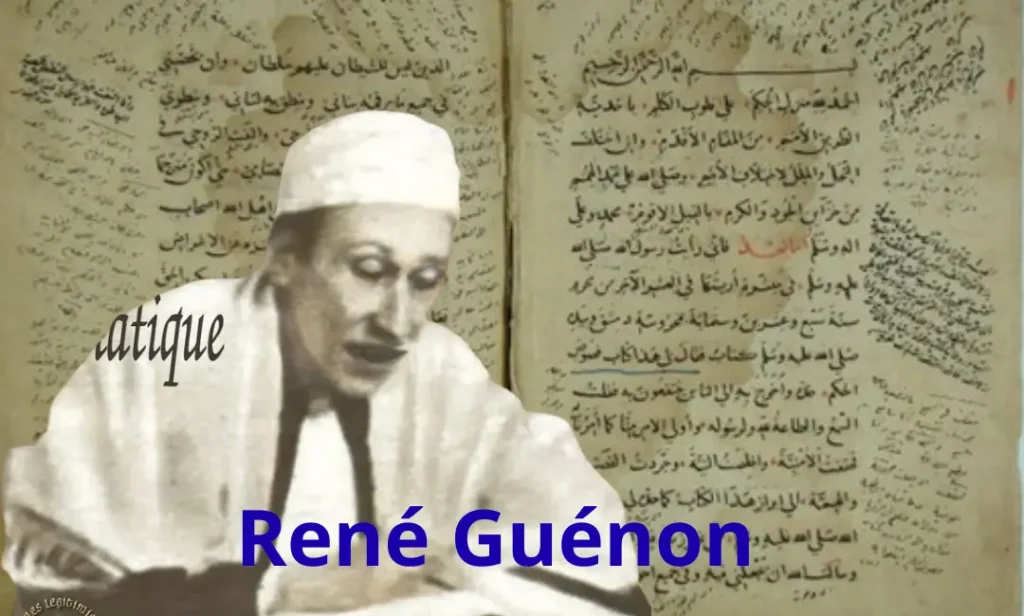
The foundational architecture of the Traditionalist School remains inextricably linked to the intellectual labor of René Guénon, whose conversion to Islam and adoption of the name Sheikh Abd al-Wahid Yahya marked a pivotal moment in the re-establishment of sacred science. Guénon’s role was not that of a “philosopher” in the modern sense—proposing personal opinions—but rather that of a “providential transmitter” of immutable principles. His work functioned as a surgical deconstruction of Western intellectual deviations, such as evolutionism, progressivism, and psychologism, which he viewed as the “signs of the times” indicating a final dissolution. By synthesizing the Vedantic doctrines of the East with the esoteric heart of Islam and the remnants of Western Hermeticism, Guénon provided a rigorous framework for “Pure Metaphysics.” His writings demanded a total intellectual “metanoia,” requiring the seeker to abandon the discursive limitations of the human ego in favor of a totalizing, supra-rational certainty that resides in the Divine Intellect.
Frithjof Schuon and the Aesthetic Dimension of the Sacred
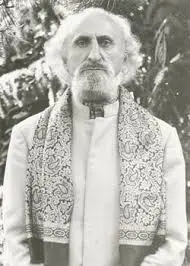
If Guénon was the architect of the Traditionalist structure, Frithjof Schuon (Sheikh Isa Nur al-Din) was the one who infused it with the “fragrance” of spiritual realization and aesthetic profundity. Schuon expanded the school’s horizons by articulating the doctrine of the “Transcendent Unity of Religions” with unparalleled metaphysical clarity, emphasizing that the “Heart” is the point where all formal revelations intersect. His contribution was uniquely centered on the “Religion of the Heart” (Religio Perennis), which he described as the inward core that sustains the outward shells of diverse religious forms. Schuon’s perspective integrated the “Beauty of the Divine” as a necessary path to the “Truth of the Divine,” arguing that sacred art, music, and liturgy are not mere cultural artifacts but essential “theophanies” that facilitate the soul’s ascent. His work serves as a bridge between the cold rigor of metaphysical principles and the warm, transformative power of spiritual virtue and contemplative prayer.
Ananda Coomaraswamy and the Restoration of Sacred Art
Ananda Coomaraswamy played a crucial role in the Traditionalist School by applying its principles to the realms of art, craft, and social philosophy, effectively bridging the gap between Eastern and Western aesthetic traditions. He famously asserted that “the artist is not a special kind of man, but every man is a special kind of artist,” thereby critiquing the modern cult of the “genius” and the “art for art’s sake” movement. Coomaraswamy demonstrated that in traditional societies, art was never divorced from its metaphysical function; every craft was a ritual, and every symbol was a vehicle for a higher truth. His immense erudition allowed him to trace the “perennial” symbols across Hindu, Buddhist, and Christian iconographies, proving that the language of the spirit is universal and objective. Through his work, the Traditionalist School reclaimed the “Philosophy of Art” as an essential branch of metaphysics, showing that a society’s spiritual health is directly reflected in the beauty and symbolic integrity of its craftsmanship.
Seyyed Hossein Nasr and the Contemporary Synthesis
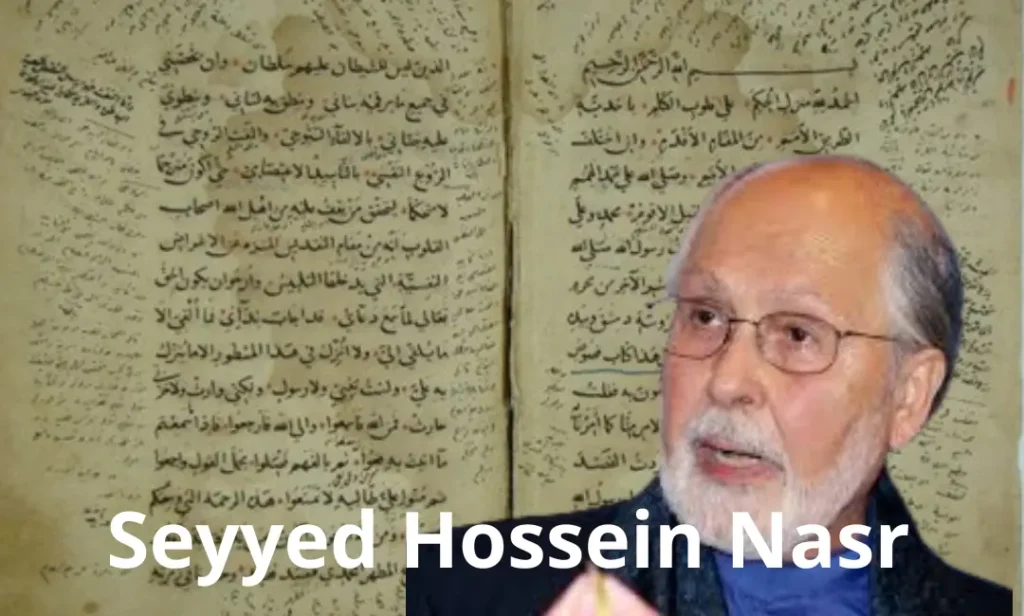
The contemporary relevance of the Traditionalist School is most prominently represented by Seyyed Hossein Nasr, who has successfully integrated these timeless principles into the modern academic and ecological discourse. Nasr has been a tireless advocate for the “Sacred Science” as an alternative to the desacralized science that has led to the current environmental catastrophe. His work emphasizes the “Philosophia Perennis” within the Islamic intellectual tradition, particularly through the works of Suhrawardi and Mulla Sadra, thereby showing that the Traditionalist perspective is not an antiquated relic but a dynamic solution to modern dilemmas. By addressing issues such as the “Man and Nature” crisis and the “Needs of the Modern Soul,” Nasr has demonstrated that the recovery of the Sacred is the only way to restore the broken equilibrium of the planet. His legacy continues to inspire a new generation of scholars to look beyond the “horizontality” of modern thought and seek the “vertical” illumination that only the Traditionalist path provides.
Titus Burckhardt: The Guardian of Sacred Art and Urban Spirituality
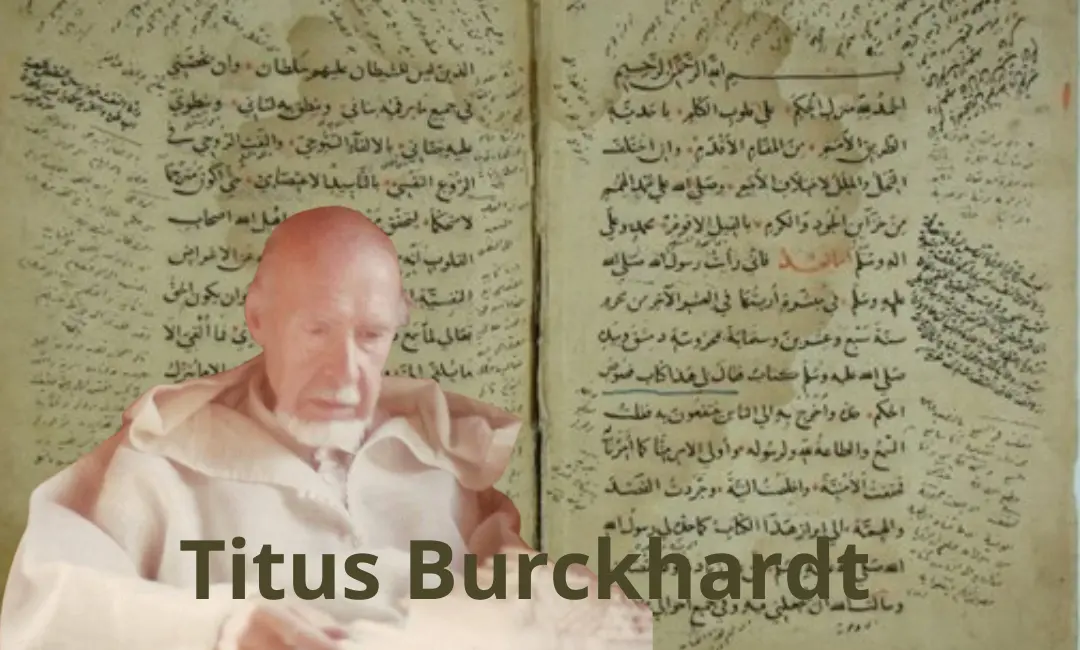
– His Role in the Traditionalist Lineage
Burckhardt (1908–1984) was instrumental in moving the Traditionalist discourse from pure metaphysical theory to the study of sacred forms. His work was not merely academic; he lived the tradition by immersing himself in the spiritual atmosphere of North Africa, particularly in Fez, Morocco, which he considered a living museum of traditional Islamic civilization.
– The Metaphysics of Art and Architecture
Burckhardt’s primary contribution was proving that sacred art is not “aesthetic” in the modern sense, but a “science of the soul.” In his seminal work, Sacred Art in East and West, he demonstrated how the geometry of a cathedral or the arabesque of a mosque reflects the internal structure of the cosmos. He famously stated:
“Sacred art is not made for museums; it is a tool for the spiritual transformation of the human being, a reflection of the Divine Order in the world of matter.”
– His Masterpiece on Sufism
His book, An Introduction to Sufi Doctrine, remains one of the most lucid and authoritative English-language introductions to Islamic esoterism. Unlike modern orientalists, Burckhardt wrote as an “insider,” explaining complex concepts like Wahdat al-Wujud (The Unity of Being) with a clarity that bridges the gap between Eastern spirituality and the Western intellect.
– The Alchemical Tradition
Burckhardt also rescued Alchemy from the misconception that it was a primitive form of chemistry. In his book Alchemy: Science of the Cosmos, Science of the Soul, he explained that alchemy was a traditional craft intended to “transmute” the lead of the fallen human soul into the gold of spiritual perfection.
Other traditionnalist school thinkers :
Titus Burckhardt (The Guardian of Sacred Form)
Burckhardt played the role of the “aesthetic metaphysician” within the school, shifting the focus from abstract theory to the tangible manifestations of the Sacred. His primary contribution was the decoding of sacred art and architecture, particularly in the Islamic and Christian traditions. He argued that beauty is not a subjective preference but a mathematical and spiritual necessity that reflects the Divine Order, serving as a support for contemplative life.
His work in Fez, Morocco, allowed him to document a “living tradition” before its erosion by modernism. He viewed the traditional city as an organic extension of the human soul, where every craft—from tanning to calligraphy—was a ritual. His intellectual labor provided the school with a rigorous “Science of Symbols,” showing how geometric patterns and spatial arrangements function as vehicles for metaphysical truths.
In his studies on Alchemy and Sufism, Burckhardt rescued these disciplines from modern misunderstandings. He presented Alchemy as a “Science of the Soul” intended for internal transmutation rather than a primitive chemistry. Through his translations of Ibn ‘Arabi and Abd al-Karim al-Jili, he provided the West with the most lucid explanations of the “Unity of Being” (Wahdat al-Wujud), ensuring that the esoteric heart of Tradition remained intellectually accessible.
Martin Lings (The Voice of Spiritual Presence)
Martin Lings, known as Sheikh Abu Bakr Siraj ad-Din, was the school’s most eloquent representative of “Spiritual Presence.” While others focused on metaphysics, Lings focused on the “Odor of Sanctity” and the poetic dimension of Tradition. His masterpiece on the life of the Prophet Muhammad is regarded as a hallmark of traditional biography, as it treats historical facts not as mere data, but as sacred “signs” (ayat) that manifest the Divine Will in time.
Lings was a world-renowned expert on Shakespeare and symbolism, arguing that the loss of symbolic intelligence is the greatest tragedy of the modern era. He demonstrated that traditional literature and art are “Sacred Mirrors” that help the soul recognize its celestial origin. His work emphasized the necessity of “initiation” (bay’ah) and the adherence to a revealed path, warning that intellectualism without spiritual practice is a “dead letter.”
His contributions to the study of Quranic calligraphy and illumination highlighted the “Visual Theophany” of the Divine Word. Lings argued that the beauty of sacred manuscripts is an extension of the Revelation itself, intended to “silence” the mind and “awaken” the heart. Through his presence and writings, he bridged the gap between the rigor of Guénonian metaphysics and the warmth of Sufi devotion, making him a central figure for seekers in the West.
William Stoddart (The Synthesizer of Perennialism)
William Stoddart acted as the school’s primary “systematizer” and “clarifier.” His role was essential in distilling the complex and often dense metaphysical works of Guénon and Schuon into accessible, yet intellectually uncompromising, summaries. He focused on the “Essentialism” of the Traditionalist path, defining the core concepts of Esoterism and Exoterism with surgical precision for an academic audience.
Stoddart emphasized the “Universal Orthodoxy” that underlies all authentic religions. He argued that while the “forms” of religion are diverse and must be respected, their “essence” is identical. His writings provided a clear map for the modern seeker to navigate the confusion of “New Age” pseudo-spiritualism, asserting that there is no spirituality without a divinely revealed Tradition and a disciplined moral life.
His work often centered on the “Remembrance of God” as the ultimate goal of all traditional forms. By stripping away unnecessary academic jargon, Stoddart made the “Perennial Philosophy” a viable intellectual framework for contemporary scholars. He remains a crucial bridge, ensuring that the foundational principles of the school remain clear, consistent, and protected from dilution in the modern marketplace of ideas.
Jean-Louis Michon (The Bridge to Islamic Aesthetics)
Jean-Louis Michon was a specialist in the “Living Heritage” of the Islamic world, particularly in North Africa. His work focused on the intersection of spirituality, art, and social structure. He argued that the “Traditional Man” lives in a state of constant “remembrance” because his environment—from the mosque to the marketplace—is designed to reflect the Divine Names, unlike the “desacralized” environments of modern cities.
Michon’s contribution was vital in defending the “Integrity of Tradition” against modern industrialization. He saw the traditional craftsman not as a worker, but as a “co-creator” with the Divine. His extensive research on Sufi brotherhoods and traditional music showed how rhythm and form are used to harmonize the human psyche with the cosmic order, providing a practical dimension to the school’s metaphysical theories.
As a scholar and international consultant for heritage preservation, Michon fought for the “visual and spiritual ecology” of traditional societies. He believed that preserving a traditional building or a craft was an act of “spiritual resistance” against the “Reign of Quantity.” His legacy lies in his ability to show that the Traditionalist perspective is not just a theory, but a way of seeing and interacting with the world that preserves the dignity of the human spirit.
Huston Smith (The Academic Ambassador)
Huston Smith was the “Ambassador of the Sacred” to the modern academic world, particularly in the United States. While not a direct disciple of the founders in a formal sense, he adopted the Perennialist framework to teach the world’s religions. He famously argued that “the wisdom traditions” of humanity are the only cure for the nihilism of modern secularism, bringing the school’s ideas to millions of people through his books and documentaries.
Smith’s role was to challenge the “Scientism” of the modern university. He argued that science can tell us about the “how” of the universe, but only Tradition can tell us about the “Why.” He adopted the Schuonian concept of the “Transcendent Unity of Religions” to show that all great faiths lead to the same peak, providing a metaphysical basis for religious pluralism that avoids the trap of shallow relativism.
His intellectual journey was a defense of “Objective Truth” in an age of subjectivism. Smith championed the idea that the “Invisible World” is more real than the visible one, a core Traditionalist tenet. By using his academic prestige to support figures like Nasr and Schuon, he ensured that the “Perennial Philosophy” was taken seriously in the highest levels of Western academia, acting as a “protector” of sacred values in a profane age.
Lord Northbourne (The Pioneer of Sacred Ecology)
Lord Northbourne was the first to apply Traditionalist principles to the realm of agriculture and the environment, coining the term “Organic Farming” in a metaphysical context. He argued that the modern exploitation of the land is a direct result of the “desacralization” of nature. To Northbourne, the soil was not just a chemical medium, but a sacred trust that requires a “traditional” relationship based on stewardship rather than dominance.
His book Look to the Land serves as a “Manifesto of Traditional Ecology.” He believed that the modern agricultural crisis was a symptom of a deeper spiritual crisis: the loss of the “Vertical Dimension.” By treating the earth as a mere commodity, modern man has severed his link with the Divine. Northbourne called for a return to “Qualitative Agriculture,” where the health of the land is seen as a reflection of the spiritual health of the community.
Within the school, Northbourne represented the “practical application” of metaphysics to the primary human activity: sustenance. He argued that “Tradition” must inform the way we eat, plant, and live with nature. His work laid the foundation for the “Sacred Ecology” later developed by Seyyed Hossein Nasr, proving that the Traditionalist School offers the only viable solution to the environmental catastrophe by restoring the “Sacred” to the natural world.
E. F. Schumacher (The Economist of Human Scale)
- F. Schumacher brought the Traditionalist critique into the world of “Economics and Technology.” His famous work Small Is Beautiful was deeply influenced by the Perennialist concept of “Right Livelihood.” He argued that modern economics is “pathological” because it ignores the spiritual nature of man, focusing solely on the “Reign of Quantity” (consumption and growth) at the expense of human dignity.
Schumacher advocated for “Intermediate Technology” and “Human-Scale Economics,” which align with the Traditionalist view that work should be a means of spiritual perfection, not just survival. He was influenced by the school’s critique of the “Industrial Deviation,” suggesting that modern technology “enslaves” the worker by removing the creative and symbolic element from labor.
His final book, A Guide for the Perplexed, is a direct tribute to the “Great Chain of Being” and Traditionalist epistemology. In it, he argues that modern man has “lost the map” of reality by focusing only on the lowest levels of existence (the material). Schumacher’s role was to prove that the “Traditionalist School” has the answers to the most pressing material problems of our time, from poverty to technological alienation, by re-centering the economy on the “Human Spirit.”
The Restoration of the Center and the Future of Tradition-the Traditionalist School
Synthesizing the Traditionalist Paradigm shift
The Traditionalist School does not merely offer an alternative “viewpoint” within the marketplace of ideas; rather, it demands a total ontological and epistemological reorientation. By re-establishing the primacy of the Sophia Perennis, it provides a lens through which the fractured segments of modern knowledge—science, art, and religion—can be reintegrated into a unified, sacred whole. The journey through the works of Guénon, Schuon, and Nasr reveals that the “Crisis of the Modern World” is, at its root, a crisis of forgetting—a metaphysical amnesia that has severed the link between the human subject and the Divine Object. This conclusion asserts that the restitution of Tradition is not a nostalgic retreat into a romanticized past, but a rigorous intellectual return to the “Center” that is both timeless and ever-present. It is the recovery of the “Sacred Norm” which alone can provide a definitive critique of the ephemeral and often destructive currents of contemporary thought.
The Imperative of Spiritual Realization and the Path Forward
One of the most vital conclusions of this study is that Traditionalism is not a mere “philosophy” intended for passive academic consumption, but a call to “realization.” The distinction between theoretical knowledge and effective spiritual realization remains a cornerstone of this school. As the Traditionalist masters have consistently argued, the intellectual recognition of metaphysical principles is only the first step; it must be followed by an actual engagement with a living tradition through “Initiation” and practice. In the context of our modern, desacralized environment, this means that the individual must consciously choose to live “against the grain” of the prevailing materialist culture. The future of this school lies in its ability to inspire a transformative change in the human soul, moving from the peripheries of external agitation toward the silent, immutable core of the contemplative life, where the fragmented self is finally made whole in the Presence of the Absolute.
Tradition as a Remedy for the Global Ecological and Social Rupture
From a broader perspective, the Traditionalist perspective offers the only viable solution to the global crises that threaten human existence, most notably the ecological catastrophe. By restoring the “theophanic” view of nature—viewing the world as a mirror of Divine Attributes—the school provides a spiritual basis for environmental stewardship that modern secular ethics can never achieve. When nature is no longer viewed as a “resource” to be dominated but as a “sacred icon” to be venerated, the relationship between man and the cosmos is radically transformed. Furthermore, in an age of radical relativism and social fragmentation, the “Transcendent Unity of Religions” provides a profound framework for authentic inter-religious understanding. This unity is based on a shared metaphysical depth rather than a superficial compromise of forms, offering a way for diverse spiritual communities to coexist through a shared recognition of the Sacred.
Final Reflections: The Timeless Relevance of the Perennial Wisdom in traditionalist school
In final reflection, the Traditionalist School stands as a “fortress of light” in an age increasingly dominated by the shadows of nihilism and the “Reign of Quantity.” Its enduring relevance lies in its unwavering commitment to the “Truth” regardless of historical trends or popular consensus. As we have explored in this research, the principles of the Sophia Perennis are as applicable today as they were in the dawn of human civilization, for they pertain to the very nature of Reality itself. For the modern seeker, especially those utilizing digital platforms and applications to access this wisdom, the message is clear: the “Traditional” is not that which is old, but that which is “Eeternal.” By re-centering our lives and our intellects upon these perennial truths, we participate in a legacy that transcends the limitations of time and space, ensuring that the flame of the Sacred remains unextinguished in the heart of humanity. Traditionalist School
Bibliography & Suggested Reading
Primary Sources
- Guénon, René. The Crisis of the Modern World. Translated by Arthur Osborne. London: Luzac & Co., 1942.
- Guénon, René. The Reign of Quantity and the Signs of the Times. Translated by Lord Northbourne. Ghent, NY: Sophia Perennis, 2001.
- Schuon, Frithjof. The Transcendent Unity of Religions. Introduction by Huston Smith. Wheaton, IL: Quest Books, 1993.
- Schuon, Frithjof. Understanding Islam. Bloomington, IN: World Wisdom Books, 1998.
- Coomaraswamy, Ananda K. Christian and Oriental Philosophy of Art. New York: Dover Publications, 1956.
- Traditionalist School
Secondary & Contemporary Sources
- Nasr, Seyyed Hossein. Knowledge and the Sacred: The Gifford Lectures. Albany, NY: State University of New York Press, 1989.
- Nasr, Seyyed Hossein. The Need for a Sacred Science. Albany, NY: State University of New York Press, 1993.
- Lings, Martin. Ancient Beliefs and Modern Superstitions. Cambridge: Archetype, 2001.
- Oldmeadow, Kenneth. Traditionalism: Religion in the Light of the Perennial Philosophy. Sri Lanka: Sri Lanka Institute of Traditional Studies, 2000.
- Sedgwick, Mark. Against the Modern World: Traditionalism and the Secret Intellectual History of the Twentieth Century. Oxford: Oxford University Press, 2004.
- Traditionalist School