
The Sophia Perennis and the Traditionalist Critique: on Project of Seyyed Hossein Nasr
Element I: Metaphysical Epistemology and the Restoration of Scientia Sacra
1. The Ontological Crisis of Modern Epistemology
The primary objective in Sophia Perennis of Seyyed Hossein Nasr’s intellectual project is to diagnose and rectify the “metaphysical amnesia” that characterizes modern Western thought. Nasr argues that since the Enlightenment, knowledge has been systematically stripped of its sacred character, reduced to a purely horizontal accumulation of empirical data. This “Desacralization of Knowledge” has led to a fractured world-view where the human subject is alienated from the Divine Source.
In sophia perennis, Knowledge and the Sacred, Seyyed Hossein Nasr posits that modern epistemology is “pathological” because it ignores the hierarchical structure of reality, focusing exclusively on the material shell of existence. He contends that without a vertical link to the Absolute, human knowledge becomes a tool for destruction rather than a path to salvation. Nasr asserts:
“Modern man has sold his soul for the sake of a knowledge that is limited to the peripheral and the ephemeral. By rejecting the ‘Sacred Science’ that perceives the various levels of being, he has imprisoned himself in a world of mere quantities, losing the qualitative vision that allows the soul to recognize the Presence of the Infinite in the finite.”
2. The Supremacy of the Intellect over Discursive Reason
A central pillar in sophia perennis of Seyyed Hossein Nasr’s epistemological restoration is the vital distinction between the “Intellect” (Al-’Aql) and “Reason” (Ratio). Nasr maintains that modern philosophy has committed a fatal error by equating the two. While reason is a discursive faculty limited to logic and sensory analysis, the Intellect is the “Eye of the Heart” (’Ain al-Qalb), a supra-rational faculty capable of direct, intuitive perception of metaphysical truths. In The Need for a Sacred Science, Nasr explains that the Intellect is a divine spark within the human soul that remains connected to the Universal Intellect. He argues that modern rationalism is a “rebellion” of the lower faculty against the higher, leading to a state of intellectual blindness where man can no longer “see” the sacred symbols of the cosmos. Nasr writes:
“The Intellect is the light which shines in the heart and allows man to perceive the unitive truth of the Spirit. It is the faculty of ‘intellection’ which transcends the dualism of subject and object, whereas reason can only deal with the relative and the finite. To restore the Intellect is to restore the very capacity for ‘Gnosis’ and ‘Vision’ which is the birthright of the ‘Traditional Man’.”
3. Scientia Sacra as the Ultimate Cognitive Harmony
Nasr proposes Scientia Sacra—the “Sacred Science”—as the ultimate framework for achieving cognitive harmony in an age of fragmentation. This science is not merely “religious information” but a participatory knowledge that transforms the seeker. It provides a “Total Map of Reality,” integrating mathematics, physics, and art into a unified metaphysical whole. Nasr argues that Scientia Sacra is the “Heart of Tradition,” and without it, all human endeavors are doomed to nihilism. In The Essential Seyyed Hossein Nasr, he emphasizes that this science is perennial and universal, found at the core of all authentic revelations. It teaches that the universe is a “Theophany” (a manifestation of God) and that the purpose of knowledge is to recognize the “Unity” (Tawhid) underlying the diversity of forms. Nasr eloquently states:
“Sacred Science is the only science that can provide a total view of reality, integrating the material, psychic, and spiritual domains. It is a knowledge that ‘sanctifies’ the knower, leading him from the ‘multiplicity’ of the periphery back to the ‘Unity’ of the Center. Without this sacred foundation, human life is reduced to a meaningless agitation in a desacralized void.”
4. The Alchemical Transformation of the Knower
Finally, Nasr’s epistemology asserts that true knowledge is inseparable from “Being.” Unlike modern academia, which separates the “intellectual” from the “spiritual,” Nasr insists that one cannot truly know the Truth without being transformed by it. Knowledge is a “spiritual alchemy” that transmutes the lead of the fallen soul into the gold of spiritual perfection. In his work, Islamic Life and Thought, Nasr argues that the “Traditional Scholar” is also a “Contemplative,” whose research is an extension of his prayers. This integration of virtue and knowledge is the only safeguard against the “pride” of modern scientism. Nasr maintains that the pursuit of truth requires a state of “spiritual poverty” (Faqr) and humility before the Infinite. He concludes:
“Traditional knowledge is not a commodity to be acquired, but a light to be realized. It requires a ‘Metanoia’—a total change of the soul—where the ego is silenced so that the Divine Word can be heard. In the tradition of ‘Hikmah,’ to know is to be, and to be is to witness the Beauty of the Absolute in every facet of the created order. Only through this alchemical transformation can humanity regain its lost dignity and fulfill its role as the bridge between Heaven and Earth.”
The Concept of Sophia Perennis and the Transcendent Unity of Religions
1. The Ontological Nature of the Perennial Wisdom
At the very heart of Seyyed Hossein Nasr’s intellectual project lies the re-articulation of the Sophia Perennis, or “Perennial Wisdom,” which he identifies as the timeless, uncreated Truth that has been revealed to humanity through various “Traditional” forms across history. Nasr argues that this wisdom is not a human discovery or a product of cultural evolution, but a divine “Presence” that provides the metaphysical foundation for all authentic civilizations. In his seminal work, Knowledge and the Sacred, Nasr distinguishes between the “profane” history of ideas and the “sacred” history of Truth, asserting that the Sophia Perennis is the “Heart of Tradition” itself. He posits that this wisdom is “uncreated” because it pertains to the Divine Essence and is therefore immutable despite the shifting tides of time. Nasr contends:
“The Sophia Perennis is that wisdom which has always been and will always be, which is imprinted upon the very texture of the human soul. It is the ‘Sanctifying Knowledge’ that allows man to recognize his celestial origin and his ultimate end, transcending the dualism of subject and object through a unitive vision of reality.”
For Nasr, the recovery of this perennial perspective is the only way to rescue the modern soul from the “labyrinth of relativism,” as it provides a stable “Center” in a world of fragmented peripheries.
2. The Metaphysical Doctrine of Transcendent Unity
Building upon the foundations laid by Frithjof Schuon, Nasr provides a rigorous academic defense of the “Transcendent Unity of Religions,” a doctrine that serves as the primary antidote to both religious exclusivism and secular syncretism. Nasr argues that while religions differ fundamentally at their “exoteric” or formal level—dictated by the specific needs of different branches of humanity—they converge at their “esoteric” or inward core. In his book, The Need for a Sacred Science, Nasr explains that this unity is “transcendent” because it is not found through a shallow “inter-faith” compromise, but through an ascent to the metaphysical level where all forms melt into the Divine Light. He maintains that the diversity of religious forms is a “Divine Mercy,” as it allows the Infinite Truth to be manifested in a way that is accessible to diverse human temperaments. Nasr observes:
“The unity of religions is to be found only in the Absolute; on the level of forms, religions are different and even contradictory, but these contradictions vanish like shadows when one reaches the inward, sapiential heart of each revelation. To deny the diversity of religions is to deny the richness of the Divine Manifestation.”
This doctrine allows Nasr to champion a “Universal Orthodoxy” that respects the sanctity of each specific tradition while recognizing the “Divine Presence” in the “Other.”
3. The Sapiential Tradition as the Heart of Islamic Intellectuality
Nasr’s project is uniquely characterized by his effort to demonstrate that the Sophia Perennis is not an “alien” concept to Islam, but is identical to the Al-Hikmah al-Khalidah (The Eternal Wisdom) found in the writings of Sufi masters. He argues that the Islamic intellectual tradition, particularly the “Transcendent Philosophy” (Al-Hikmah al-Muta’aliyah) of Mulla Sadra, constitutes a supreme manifestation of this Perennial Wisdom. In his work, The Essential Seyyed Hossein Nasr, he demonstrates that for the Muslim Hakim (Sage), there is no conflict between “Faith” and “Gnosis,” as both are seen as different modes of participating in the Divine Word. Nasr emphasizes that the Islamic tradition provides a “Total Metaphysics” that can integrate all orders of knowledge into a unified whole. He eloquently states:
“Islamic Hikmah is nothing other than the application of the perennial principles of Truth to the specific formal environment of the Quranic revelation. It is a ‘Sacred Science’ that leads from the ‘Signs’ (Ayat) in the horizon and the soul back to the ‘Signified’ (Al-Musamma), proving that the heart of Islam is an inexhaustible spring of Sophia.”
By anchoring the Perennial Philosophy within the specificities of the Islamic heritage, Nasr provides a powerful “Intellectual Jihad” against the modern perception that “Tradition” is synonymous with “Stagnation.”
4. The Universal Function of the Primordial Nature (Fitrah)
The final dimension of this element is Nasr’s focus on the Fitrah, or the “Primordial Nature” of the human being, which serves as the internal faculty for recognizing the Sophia Perennis. Nasr argues that every human being is born with an innate “longing for the Absolute,” which modern civilization attempts to suppress through the noise of secularism. In Islam and the Plight of Modern Man, Nasr explains that the role of Tradition is to “re-awaken” this dormant nature. He asserts that the Sophia Perennis is not an external body of information to be memorized, but an internal reality to be “remembered” (Dhikr). The “Transcendent Unity of Religions” is therefore not just a theological theory, but a psychological reality rooted in the fact that all human spirits originate from the same Divine Breath. Nasr concludes:
“The goal of the Perennial Philosophy is to return man to his ‘Primordial State,’ where the heart becomes a mirror reflecting the Divine Unity. By recognizing the universal truths present in all authentic traditions, man can transcend the ‘alienation’ of the modern era and fulfill his cosmic function as a bridge between the finite and the Infinite. This ‘Return’ is the only path to a permanent peace that is not merely the absence of war, but the presence of God.”
The Critique of Scientism and the Metaphysics of the Ecological Crisis
1. The Deconstruction of Scientism and the Quantitative Illusion
The pivotal thrust of Seyyed Hossein Nasr’s critique of the modern world lies in his rigorous deconstruction of “Scientism”—the ideological conviction that the empirical, reductive, and quantitative method of modern science is the sole arbiter of truth. Nasr argues that modern science, while masterfully proficient in its own limited domain of the physical world, has committed a catastrophic “metaphysical transgression” by claiming to provide a totalizing view of reality. In his foundational work, The Need for a Sacred Science, Nasr asserts that the modern scientific revolution was not merely a discovery of new facts, but a “metaphysical revolt” that effectively “blinded” the human intellect to the qualitative and symbolic dimensions of existence. By reducing the cosmos to a “machine” governed by blind mathematical laws, modern scientism has stripped nature of its “Theophanic” character—its capacity to manifest the Divine Names and Attributes. Nasr contends:
“Modern science is a knowledge of the shell of things, not their kernel. By rejecting the ‘Sacred Science’ which perceives the hierarchical levels of being, modern man has replaced the ‘Quality’ of the cosmos with mere ‘Quantity,’ leading to a civilization that knows the price of everything but the value of nothing. This scientism is a veil that obscures the ‘Light of Heaven’ and imprisons the human soul in a cold, mechanical void.”
2. The Ecological Crisis as a Spiritual Malady
Nasr was one of the first contemporary thinkers to identify the global ecological crisis not as a technical or political problem, but as a profound “Spiritual Malady.” He argues that the destruction of the natural world is an inevitable consequence of the “spiritual suicide” of modern man, who has forgotten his role as the “Pontiff” (Pontifex)—the bridge between Heaven and Earth. In his prophetic work, Man and Nature: The Spiritual Crisis of Modern Man, Nasr posits that the environmental catastrophe is a “sign of the times,” reflecting the inner chaos of the human soul. When man loses his vertical orientation toward the Divine, he inevitably loses his horizontal equilibrium with the natural environment. Nasr rejects the “shallow ecology” of modern environmentalism, which seeks to fix the earth through the same technology that damaged it. He notes:
“The ecological crisis is but an external reflection of the inner spiritual crisis of modern man who has declared war against Heaven and is, consequently, at war with the earth. We cannot save the natural environment without first saving the human soul from the darkness of secularism. Nature is a ‘Sacred Icon’ to be contemplated, not a ‘commodity’ to be consumed; and until we regain the ‘Vision of the Sacred,’ our attempts to heal the planet will remain superficial and futile.”
3. The Restoration of the Theophanic Vision of Nature
The third pillar of Nasr’s ecological project is the restoration of the “Theophanic Vision,” a perspective rooted in the Islamic concept of Ayat (Signs) and the Sophia Perennis. Nasr argues that in every traditional civilization, nature was viewed as a “Sacred Text” that reveals the Divine Presence. In his work, The Encounter of Man and Nature, he emphasizes that the spiritual health of humanity depends on its ability to see the “Sacred” in the mundane—to perceive the “Light of the Spirit” in the mountain, the forest, and the sea. He proposes a “Sacred Science of Nature” that utilizes the symbolic language of tradition to interpret the natural world. This vision requires a move away from the “Promethean” man of the Renaissance, who seeks to dominate nature, and a return to the “Primordial” man (Al-Insan al-Qadim), who lives in harmony with the cosmic rhythms. Nasr asserts:
“The primordial view of nature sees every creature as a ‘theophany,’ a manifestation of a Divine Name. When we look at a tree or a flower with the ‘Eye of the Heart,’ we see not just a biological organism, but a witness to the Infinite. The restoration of this ‘Theophanic Vision’ is the ultimate goal of the Traditionalist project; it is the path that leads from the ‘disenchanted’ world of modern science back to the ‘enchanted’ garden of sacred wisdom.”
4. The Cosmic Responsibility of the Human Khalifah
Finally, Nasr connects the ecological destiny of the planet to the metaphysical status of the human being as the Khalifah (Vicegerent) of God on earth. He argues that modern secularism has granted man the “rights” of a god over nature without the accompanying “responsibilities” to the Creator. In Religion and the Order of Nature, Nasr explains that the human being is the only creature that can “speak” for nature because he possesses the Intellect that reflects the Universal Logos. Therefore, the environmental crisis is a failure of human “Priesthood.” To save the earth, man must first undergo a “Metanoia”—a total change of heart—and recognize that he is responsible to God for the treatment of every living being. Nasr concludes:
“To be the vicegerent of God on earth is to be the guardian of the sacred order of nature. This responsibility is not a burden but a spiritual necessity, for man cannot find peace within himself if he is at war with the cosmic environment. The protection of the environment is a ‘sacred duty’ that is inseparable from the quest for spiritual perfection. Only by recognizing our celestial origin can we fulfill our terrestrial mission and ensure that the earth remains a sanctuary for the spirit rather than a tomb for a fallen humanity.”
Intellectual Biography and the Synthesis of Sapiential Influences
1. The Convergence of Persian Hikmah and Western Academia
The intellectual genesis of Seyyed Hossein Nasr is marked by a providential intersection between the profound depths of the Persian “Illuminationist” tradition and the rigorous discipline of Western scientific training. Born into a family of distinguished scholars in Tehran, Nasr’s early immersion in classical Islamic philosophy provided him with an ontological “anchor” that remained steadfast during his formative years at MIT and Harvard. Nasr argues that his experience in the West, particularly his encounter with modern physics, did not diminish his faith but rather sharpened his critique of modern rationalism. He realized that modern science, despite its empirical successes, was “metaphysically homeless.” In his reflective work, The Essential Seyyed Hossein Nasr, he notes that his intellectual journey was a quest to find a language that could communicate the “Sacred Science” of the East to a West that had forgotten its own spiritual roots. He asserts:
“My academic training in the West was not an end in itself but a means to understand the ‘disease’ of modernity from within. It became clear to me that the only remedy for the fragmented consciousness of the modern world was a return to the unified vision offered by the traditional sages. My goal became the re-articulation of the Persian ‘Hikmah’ within the context of a global perennialism, proving that the light of the East is a metaphysical reality that can illuminate the darkness of secular thought.”
2. The Akbarian Foundation and the Metaphysics of Being
The most profound influence on Nasr’s metaphysical structure is undoubtedly the “Akbarian” school of Muhyiddin Ibn ‘Arabi. Nasr views Ibn ‘Arabi not merely as a mystic but as the “Supreme Metaphysician” whose doctrine of Wahdat al-Wujud (The Transcendent Unity of Being) provides the definitive solution to the modern problem of dualism. Nasr’s project is deeply permeated by the Akbarian concept of the “Universal Man” (Al-Insan al-Kamil), which he uses as the spiritual prototype for reclaiming human dignity in a desacralized age. In his work, Three Muslim Sages, Nasr demonstrates how Ibn ‘Arabi’s gnosis serves as the “inward heart” that sustains the “outward forms” of Islamic tradition. He argues that without this sapiential depth, religion is reduced to a mere legalism. Nasr eloquently states:
“The teachings of Ibn ‘Arabi represent the most complete manifestation of the Perennial Philosophy within the Islamic citadel. To understand the ‘Signs’ of God in the soul, one must return to the Akbarian vision where every atom is seen as a ‘theophany’ of the Divine. For me, the Shaykh al-Akbar is the guide who leads us beyond the ‘labyrinth of mirrors’ that is the material world, toward the ‘Station of No-Station’ where the soul is reunited with its Absolute Source.”
3. The Meeting with Frithjof Schuon and the Traditionalist Lineage
While his roots were Islamic and Persian, Nasr’s project reached its universal maturity through his encounter with the “Traditionalist School,” most notably the works of René Guénon and Frithjof Schuon. Nasr describes his discovery of Schuon’s writings as a “homecoming” to a truth he had always known but had not yet seen expressed with such clarity. Schuon’s doctrine of the “Transcendent Unity of Religions” provided Nasr with the universal framework necessary to engage in a “Global Intellectual Jihad” against the modern deviation. In his seminal Gifford Lectures, published as Knowledge and the Sacred, Nasr acknowledges Schuon as the “providential messenger” of the Perennial Philosophy. He argues that Schuon’s influence allowed him to transcend “religious provincialism” and speak to the “Universal Intelligence.” Nasr writes:
“If Guénon provided the ‘surgical’ critique of the modern world, it was Schuon who provided the ‘spiritual’ beauty and the metaphysical ‘air’ that allowed the Traditionalist perspective to breathe. My meeting with Schuon was the decisive moment that integrated my Islamic identity with a universal sapiential vision. He taught me that the ‘Perennial Philosophy’ is not a collection of doctrines but a ‘Sacred Presence’ that can be found in the heart of every true revelation.”
4. Synthesizing Ishraqi Wisdom and Global Perennialism
Finally, Nasr’s biography is a testament to the “Synthesis” of Suhrawardi’s Ishraqi (Illuminationist) wisdom and the global demands of the 20th century. By bringing the works of Mulla Sadra and Suhrawardi to the Western academic world, Nasr proved that Islam possesses a rich “Philosophical Tradition” that remains relevant for contemporary crises. His role at the Iranian Academy of Philosophy and later in American universities allowed him to bridge the gap between “Faith” and “Intellect.” He argues that the Hakim (the Sage) must be both a master of the “text” and a master of “vision.” In his work, The Philosophy of Seyyed Hossein Nasr, he reflects on his role as a preserver of tradition in a world of change. He concludes:
“My life has been dedicated to the restoration of the ‘Sacred Science’ that recognizes the unity between the knower and the known. By synthesizing the Persian intellectual heritage with the universal principles of the Traditionalist school, I have sought to provide a path for the modern seeker to return to his own ‘Inner Orient.’ This synthesis is not a new invention, but a ‘Remembrance’ of the Eternal Truth that is both ancient and ever-new, offering a beacon of certainty in an age of radical doubt.”
Tradition versus Modernism and the Critique of Fundamentalism
1. The Metaphysical Definition of Tradition vs. Modernism
In the intellectual project of Seyyed Hossein Nasr, “Tradition” is not a synonymous term for “custom” or “convention,” but is defined as a sacred transmission of truths that originate from the Divine. Nasr argues that Tradition encompasses the entire spectrum of a civilization—its laws, arts, and sciences—all of which are anchored in a transcendent Principle. Conversely, “Modernism” is characterized as a radical departure from this sacred norm, defined by its “horizontal” expansion and its denial of any vertical, transcendent reality. Nasr posits that the modern world is a “deviation” because it attempts to build a human-centric reality devoid of God. In his pivotal work, The Need for a Sacred Science, he explains that modernism is essentially the “religion of man,” where the human ego replaces the Divine Intellect as the arbiter of truth. Nasr contends:
“Tradition is that which is holy, of Divine origin, and which has been transmitted through a chain of masters and saints. Modernism, on the other hand, is the denial of the Sacred and the substitution of human reason for Divine Revelation. It is a rebellion against the very nature of reality, leading to a state of ‘metaphysical homelessness’ where man no longer knows his place in the cosmos. To be ‘modern’ is to live in a world that has been systematically stripped of its qualitative and symbolic meaning.”
2. Fundamentalism as a Modernist Reaction
A unique and vital aspect of Nasr’s thought is his sharp distinction between “Tradition” and “Fundamentalism.” While many secular observers mistakenly conflate the two, Nasr argues that fundamentalism is, in fact, a “modernist” phenomenon in disguise. He contends that fundamentalism is a reactive, ideological, and often violent response to the pressures of modernity, one that lacks the metaphysical depth and aesthetic beauty of authentic Tradition. Nasr observes that fundamentalists often adopt the same rationalistic and literalistic mindset as their modernist counterparts, reducing the richness of sacred texts to narrow, legalistic formulas. In his work, Islam: Religion, History, and Civilization, he notes that fundamentalism is often a “spiritually impoverished” movement that focuses on external forms while ignoring the internal, esoteric heart (Al-Batin). Nasr asserts:
“Fundamentalism is a child of the modern world; it is a reaction that often shares the same intellectual premises as the modernism it seeks to oppose. It lacks the ‘Sapiential Dimension’ and the spirit of ‘Beauty’ which are the hallmarks of Tradition. By reducing religion to a political ideology or a dry legalism, fundamentalists betray the very Truth they claim to protect. Authentic Tradition is characterized by its universality and its inward depth, whereas fundamentalism is often narrow and exclusive.”
3. The Restoration of Orthodoxy and Universalism
Nasr argues that the only effective remedy for the polarization between modernism and fundamentalism is the restoration of “Orthodoxy” in its original sense: “Right Doctrine.” This orthodoxy is inseparable from “Universalism,” as it recognizes that the same Truth is expressed through various authentic traditional forms. Nasr’s project seeks to revitalize the “Perennialist Perspective,” which allows for a deep commitment to one’s own tradition while recognizing the “Divine Presence” in others. He believes that the modern “Crisis of Identity” can only be solved by re-connecting the human soul to its “Primordial Nature” (Al-Fitrah), which is intrinsically traditional. In Knowledge and the Sacred, he emphasizes that the “Traditional Man” is not a man of the past, but a man of the “Eternal,” who lives in a state of constant “remembrance.” Nasr eloquently states:
“The goal of the Traditionalist scholar is to recover the ‘Sacred Norm’ that allows for a harmonious integration of all domains of life. This requires a ‘Metanoia’—a total change of heart and mind—that moves away from the peripheral agitation of the modern world toward the silent Center of the Spirit. True orthodoxy is not a set of rigid dogmas, but a living participation in the Truth that sets us free. It is through this restoration of the ‘Vertical Dimension’ that humanity can rediscover its dignity.”
4. The Struggle for the Sacred in a Secular Age
Finally, Nasr views the tension between Tradition and Modernity as the defining spiritual war of our age. He argues that modern secularism is not a “neutral” space but an active force of “desacralization” that seeks to colonize the human mind. In Islam and the Plight of Modern Man, Nasr encourages the intellectual elite to engage in a “Jihad of the Intellect” to protect the sacred heritage of humanity. He asserts that the survival of human civilization depends on its ability to reject the “Promethean” delusion of modernism and the “literalist” trap of fundamentalism. By pointing back to the “Sages” of the past, Nasr provides a model for a future where knowledge is once again sanctified. He concludes:
“We must realize that the modern world is an anomaly in human history. To be traditional in such an age is to be a revolutionary for the sake of the Spirit. By affirming the ‘Eternal Truths’ that modernism denies and fundamentalism distorts, we provide a path of return for the modern soul. The ‘Tradition’ we defend is the living presence of the Divine in time, a light that cannot be extinguished by the darkness of secularism or the fires of ideology. Only by standing at the ‘Center’ can we find the stability to withstand the storms of the modern era.”
Art and Aesthetic Theophany: Beauty as a Path to Truth
1. The Metaphysical Foundation of Sacred Art
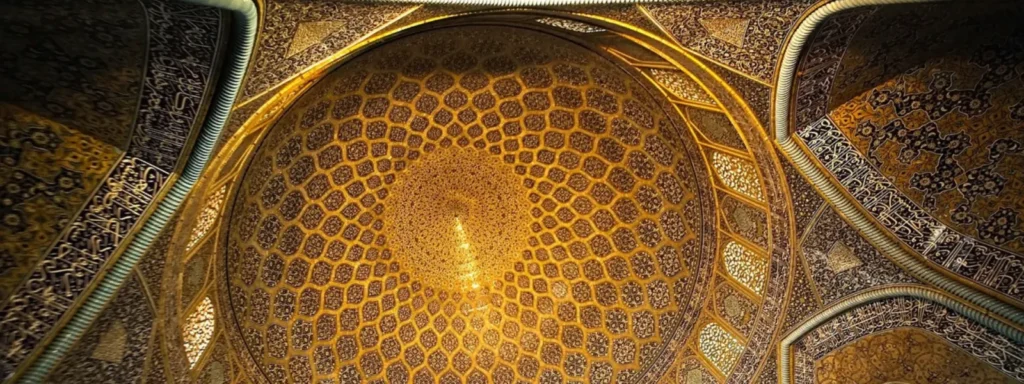
In the intellectual project of Seyyed Hossein Nasr, sacred art is never viewed as an individualistic expression of the artist’s psyche or a mere aesthetic luxury; rather, it is a “Sacred Science” that translates metaphysical principles into the language of forms, colors, and sounds. Nasr argues that traditional art is essentially “Theophanic”—it is a manifestation of the Divine Presence within the material order. He posits that in traditional civilizations, the artist acts as a channel for the “Sacred Norm,” utilizing symbolic languages that are rooted in the very structure of reality. In his profound work, The Islamic Intellectual Tradition in Persia, Nasr emphasizes that sacred art provides a “support” for contemplation, leading the soul from the multiplicity of forms back to the Unity of the Spirit. Nasr contends:
“Sacred art is the result of the crystallization of the spirit in the world of forms. It is not an imitation of the external world, but a reflection of the celestial archetypes. Through the use of symbolic geometry, rhythm, and light, sacred art enables the human soul to transcend the limitations of the physical realm and participate in the ‘Divine Beauty’ which is the splendor of Truth. To detach art from its metaphysical roots is to reduce it to a mere source of sensory stimulation.”
2. The Role of Symbolism and the Language of the Sacred
A vital pillar of Nasr’s aesthetic theory is the restoration of “Symbolism” as the primary language of the Sacred. He argues that a symbol is not a human convention or a mere metaphor, but an ontological link that participates in the reality it signifies. In his book, Sacred Art in Persian Culture, Nasr explains that traditional art utilizes symbols—such as the circle, the garden, or the calligraphy of the Divine Word—to bridge the gap between the finite and the Infinite. He maintains that the modern world has replaced “Symbolism” with “Literalism,” thereby rendering the cosmic environment opaque to the light of the Spirit. For Nasr, every element of a traditional building is a “mathematics of the soul” designed to produce a specific spiritual state. He asserts:
“The symbol is the language of the Intellect; it is the bridge between the ‘visible’ and the ‘invisible.’ In traditional art, the symbol is not something ‘added’ to the object; it is the very essence of the object’s being. When we contemplate the ‘Arabesque,’ we are not looking at a mere decoration, but at a visual representation of the ‘Unity of Being’ (Wahdat al-Wujud). The loss of symbolic intelligence in the modern era is the loss of the ability to ‘read’ the universe as a sacred text.”
3. Beauty as the Splendor of Truth and Spiritual Catalyst
The third dimension of Nasr’s project in this field is the assertion that “Beauty” is a divine attribute that is essential for the spiritual health of humanity. Following the Platonic and Sufi traditions, Nasr argues that beauty is the “attraction” of the Truth; it is that which makes the Truth “lovable” and accessible to the human heart. In his work, Knowledge and the Sacred, he emphasizes that the experience of beauty is a “spiritual catalyst” that can trigger a state of “Remembrance” (Dhikr). Nasr critiques the modern environment as being “spiritually suffocating” precisely because it is “ugly”—a world of concrete and steel that denies the soul its need for celestial harmony. Nasr eloquently writes:
“Beauty is not a luxury, but a spiritual necessity. It is the ‘Sun of Truth’ as it appears in the horizon of the soul. In a traditional setting, every act of ‘making’ is a ritual act, and every object produced is a ‘Theophany.’ The modern rejection of beauty in favor of mere ‘utility’ is a crime against the human spirit. To live in a world devoid of sacred beauty is to live in a state of ‘spiritual exile.’ We must realize that the quest for beauty is inseparable from the quest for God.”
4. The Alchemical Function of Traditional Crafts
Finally, Nasr highlights the role of traditional crafts as a means of integrating work with spiritual life. He argues that in the traditional world, the “craftsman” and the “artist” were not separated; every worker was an artist because he participated in the “Sacred Creation.” In Islamic Art and Spirituality, Nasr explains that the process of carving wood, weaving carpets, or forging metal was an “Alchemical” process that refined both the material and the soul of the maker. This integration ensured that the sacred was not confined to a temple but permeated the marketplace and the home. By restoring this view, Nasr challenges the modern industrial system that treats labor as a mechanical task and the product as a disposable commodity. He concludes:
“Traditional art and craft are the means by which the sacred is woven into the fabric of daily life. The artisan who works with a sense of ‘Ihsan’ (spiritual excellence) is performing a liturgy that sanctifies the world of matter. By returning to these traditional modes of production, we reclaim our human dignity and restore the ‘Sacred Order’ to our environment. Art is the ladder that leads from the beauty of the creation to the Infinite Beauty of the Creator, ensuring that the Earth remains a mirror of Paradise.”
The Future of Tradition in a Post-Modern World
1. Synthesizing the Nasrarian Project: A Fortress of Certainty
In concluding the examination of Seyyed Hossein Nasr’s sophia perennis project, one must recognize it as a monolithic “Fortress of Certainty” constructed against the corrosive tides of post-modern deconstruction and radical relativism. Nasr has successfully demonstrated that the Sophia Perennis is not a relic of a bygone era but a dynamic and indispensable intellectual framework for navigating the complexities of the 21st century.
His work synthesizes the rigorous logic of the Shadhili-Guénonian school with the luminous sapience of the Persian Hikmah, creating a discourse that is as academically formidable as it is spiritually profound. Nasr argues that the “Traditionalist” is the only truly “free” person in the modern world, for he is anchored in the Absolute while the rest of humanity is swept away by the “currents of the times.” In his late-career reflections in The Essential Seyyed Hossein Nasr, he emphasizes that the ultimate success of his project lies in its ability to offer a “Sacred Map” to those lost in the “metaphysical desert” of modernity. He eloquently states:
“The Traditionalist project is not about returning to the past, but about returning to the ‘Eternal Now.’ We have provided a sanctuary for the Intellect in an age of pseudo-intellectualism. Our task has been to preserve the ‘Sacred Fire’ through a long night of spiritual winter, knowing that Truth, being of Divine origin, is ultimately invincible. The fortress we have built is not made of stones, but of immutable principles that provide the only definitive answer to the nihilism of our age.”
2. The Enduring Legacy of Sacred Science and Ecology
The second dimension of Nasr’s conclusion focuses on the transformative potential of his “Sacred Science” and “Sacred Ecology” for the future survival of humanity. Nasr posits that the ecological crisis is a providential “warning” that modern civilization has reached its ontological limit. His legacy in this field transcends mere environmentalism; it is a call for a total “Metanoia” of the human species. Nasr’s project has laid the intellectual foundation for a future where science is once again a “Sacred Vocation” and nature is treated as a “Divine Trust.” He argues that as the materialist paradigms of the previous centuries continue to crumble under the weight of their own contradictions, the “Traditionalist Alternative” will become increasingly attractive to a generation seeking meaning beyond consumption. In Knowledge and the Sacred, he asserts that the restoration of the “Vertical Dimension” is the only way to heal the rift between man and the cosmos. Nasr notes:
“The future of humanity depends on its ability to rediscover the ‘Sacred Science’ of nature. We are witnessing the end of the illusion that man can live as a ‘rebel’ against Heaven without destroying the earth. My project has been to plant the seeds of a ‘Sacred Ecology’ that recognizes nature as a mirror of the Divine. As the modern world-view continues to dissolve into the fragments of post-modernity, the Perennial Wisdom remains the only solid ground upon which a sustainable and meaningful civilization can be rebuilt.”
3. The Primordial Nature as a Beacon for Future Generations
A vital aspect of Nasr’s legacy is his unshakable faith in the Fitrah, or the primordial nature of the human being, which remains intact despite the layers of modern conditioning. Nasr argues that the “Traditional Man” is not an extinct species but a latent reality within every human heart. For future generations, his project serves as an invitation to “re-awaken” this dormant nature through the tools of tradition—invocation, contemplation, and sacred art. In The Need for a Sacred Science, Nasr explains that the modern world cannot “kill” the sacred; it can only “veil” it. Therefore, the future of the Traditionalist school lies in its role as a “reminder” (Dhikir) for those who feel the emptiness of the secular promise. He posits that even in the darkest ages, the Truth remains accessible to those who seek it with sincerity. Nasr asserts:
“Tradition is not a museum of the past, but a living spring of water for the thirsty traveler. The modern world may build its skyscrapers and machines, but it cannot satisfy the hunger of the soul for the Infinite. By re-centering our lives on the ‘Sacred,’ we reclaim our human identity and our cosmic destiny. The light of the Sophia Perennis is like the sun; even when clouded by the storms of modernity, its power remains, waiting to illuminate the heart that is open to its rays.”
4. Final Reflections: The sophia perennis Light in the Twilight of Modernity
In final reflection, Seyyed Hossein Nasr’s project serves as a “Prophetic Witness” to the Absolute in an age of radical doubt. His contribution to the “Philosophy of Religion” and “Inter-religious Dialogue” has redefined how we understand the “Transcendent Unity” of humanity’s sacred heritage. Nasr concludes that while the “Reign of Quantity” may appear dominant, it is essentially ephemeral, for it lacks any “Being” of its own. The future of Tradition, according to Nasr, lies in the “Intellectual Jihad” of those who refuse to succumb to the “disenchantment of the world.” In his concluding remarks in Religion and the Order of Nature, he invites the modern seeker to move beyond the “peripheral agitation” toward the “Peace” that resides in the heart of the Spirit. Nasr writes:
“We live in the ‘Twilight of Modernity,’ a time of great confusion but also of great opportunity. The project I have spent my life articulating is a call to ‘Remembrance’—to remember our celestial origin and our cosmic function as ‘Viceregents’ of God on earth. The Perennial Philosophy is not a collection of dead dogmas, but a living ‘Sapience’ that provides the ‘Breath of the Spirit’ to a suffocating world. As the shadows lengthen, the light of Tradition shines more brightly for those who have eyes to see. Our ultimate goal has always been to lead the soul back to its ‘Inner Orient,’ where the sun of Truth never sets.”
Glossary of Key Terms
This glossary explains the technical vocabulary used throughout the Nasrarian project, bridging the gap between modern academic terminology and traditional sapiential wisdom.
- Sophia Perennis (Perennial Wisdom): The “uncreated” and timeless Truth that lies at the core of all authentic religions. It is the universal wisdom that has been revealed to humanity throughout different ages and civilizations.
- Scientia Sacra (Sacred Science): A mode of knowledge that is rooted in the Divine Intellect. Unlike modern science, which focuses only on the material world, Scientia Sacra integrates the physical, psychic, and spiritual levels of reality into a unified whole.
- Intellect vs. Reason: In Traditionalism, the Intellect (Al-’Aql) is the “Eye of the Heart,” a supra-rational faculty capable of direct perception of the Divine. Reason is a lower, discursive faculty used for logic, mathematics, and analyzing the material world.
- Theophany (Tajalli): The manifestation of God’s Names and Qualities through the forms of the created world. From this perspective, every atom in the universe “reveals” a part of the Divine Reality.
- Desacralization: The modern process of removing the “sacred” character from nature, art, and knowledge. It is the shift from seeing the world as a “Divine Icon” to seeing it as a “mechanical resource.”
- Transcendent Unity of Religions: The doctrine that while religions differ on the “exoteric” (outward/formal) level, they are unified at the “esoteric” (inward/metaphysical) level, as they all originate from the same Absolute Source.
- Fitrah (Primordial Nature): The innate spiritual disposition of the human being. Nasr argues that every person is born with an inherent “knowledge” of the Divine, which is often clouded by modern secular conditioning.
- Metanoia: A radical “turning around” or transformation of the soul. It involves shifting one’s consciousness from the peripheral world of multiplicity back to the spiritual “Center.”
Bibliography of Seyyed Hossein Nasr
This list represents the intellectual pillars of Nasr’s career, categorized by their primary thematic focus.
- Metaphysics and Perennial Philosophy
- Knowledge and the Sacred (1981): Based on his Gifford Lectures, this is Nasr’s most significant academic statement on the restoration of the sacred in the realm of knowledge.
- The Need for a Sacred Science (1993): A critique of modern scientism and a call for a return to traditional modes of understanding the cosmos.
- The Essential Seyyed Hossein Nasr (2007): A curated anthology of his most important writings across various disciplines.
- Ecology and Science
- Man and Nature: The Spiritual Crisis of Modern Man (1968): One of the first books to diagnose the environmental crisis as a spiritual rather than a technical problem.
- Religion and the Order of Nature (1996): A comprehensive historical and metaphysical survey of how different religions perceive the natural world.
- The Encounter of Man and Nature: The Spiritual Crisis of Modern Man (1968): An earlier foundational text on the metaphysical roots of ecological destruction.
- Islamic Studies and Sufism
- Ideals and Realities of Islam (1966): A classic introduction to the major dimensions of the Islamic tradition.
- The Garden of Truth: The Vision and Promise of Sufism (2007): A profound exploration of Islamic mysticism and its relevance to the modern seeker.
- Three Muslim Sages (1964): An analysis of the intellectual contributions of Avicenna, Suhrawardi, and Ibn ‘Arabi.
- Islamic Life and Thought (1981): A collection of essays on the cultural and intellectual history of the Islamic world.
- Art and Aesthetics
- Islamic Art and Spirituality (1987): A metaphysical study of the inner meaning of Islamic calligraphy, architecture, and music.
- Sacred Art in Persian Culture (1976): An exploration of how the Persian sapiential tradition manifests in artistic forms.
- sophia perennis
To view the author's academic profile:
 https://orcid.org/0009-0009-2016-0523